The “Road to the Signing” will continue to July 4th (and beyond). A dedicated group of history enthusiasts from the BRCC History Committee will chronicle daily happenings in Philadelphia, London, Black Rock and wherever the story leads us.
By April of 1776, much had occurred in the colonies that would forever change the course of history. We were one year removed from the shots fired at Lexington and Concord, George Washington had taken control of the fledgling Continental Army and the British had evacuated Boston and headed to Nova Scotia leading Washington to move his army to New York City in anticipation of a British offensive
Locally, militias were actively training (many of whom had already joined the war effort) and, Connecticut was busy assembling supplies to support the cause ultimately giving our state the nickname of the “Provision State”.
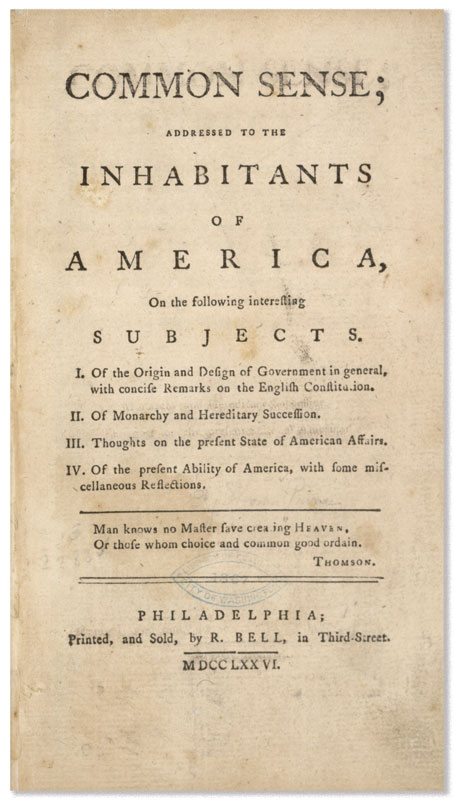
And it must not be overlooked that in January of 1776, Thomas Paine published Common Sense, an incredibly persuasive piece of writing arguing for complete separation from England and independence, not measures needed for reconciliation. Its influence was widespread and served to change the minds of many colonists and helped to inspire the troops.
Meanwhile, in Philadelphia, delegates were still months away from considering the radical move of complete separation and independence.
We will begin to provide a summary of key events leading to this “radical move” in the days and weeks ahead. Follow us and stay tuned as we tell this fascinating story and celebrate the 250th anniversary of our nation’s founding.
Black Rock Harbor’s Role as a major Trading Center for the Patriotic CauseDuring the American Revolutionary War
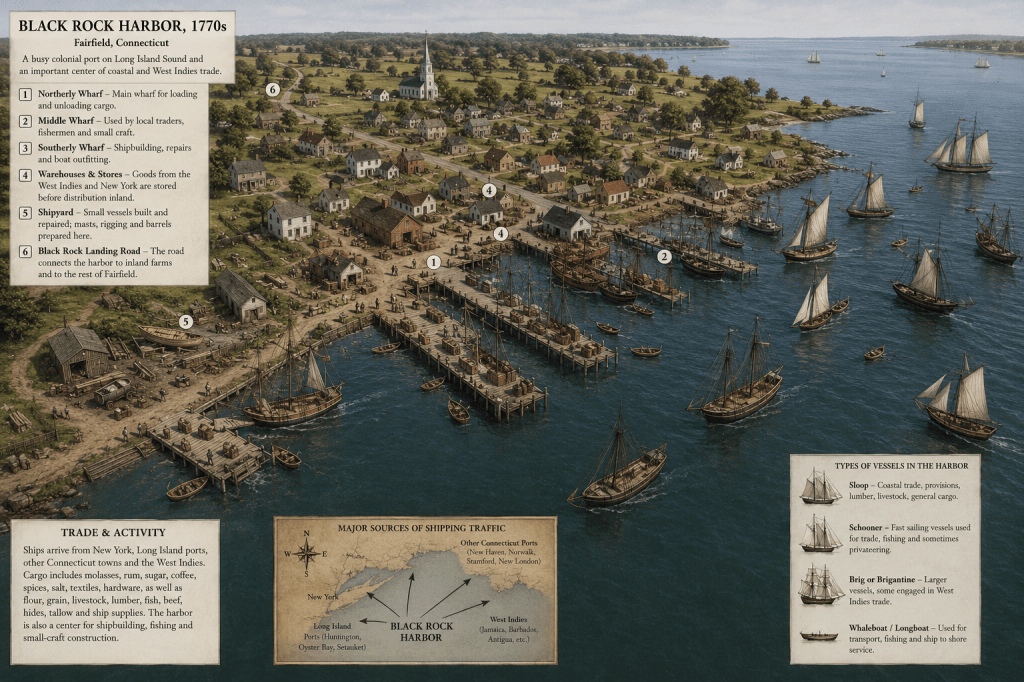
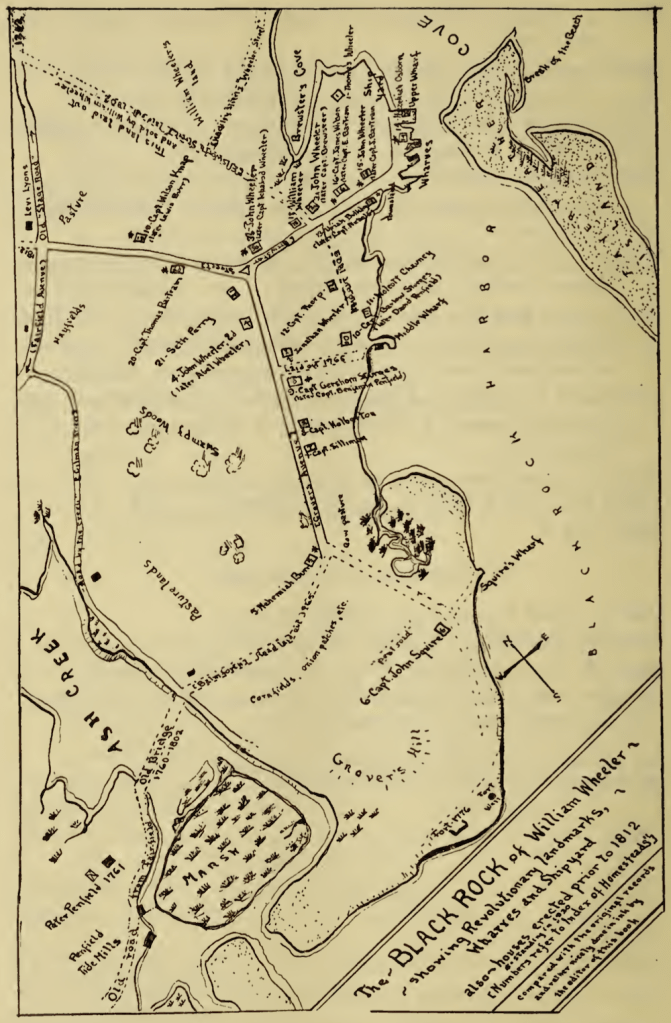
In 1702, British royal officials designated Fairfield as one of the eight lawful ports in the Connecticut Colony and in 1730 Ichabod Wheeler was granted permission to develop the first wharf at the head of Black Rock Harbor (known as Ship Harbor at that time). The wharf was further expanded to include a warehouse and in 1740 a ship yard was built on adjoining property. The combination of Fairfield’s expanding agricultural exports and the completion of a bridge over Ash Creek and road that connected Peter Penfield’s grist mill and Fairfield center to the harbor in 1753 encouraged local entrepreneurs to build two additional wharves. Squires Wharf, though initially approved in the 1750’s was completed in 1765 and located near Parson’s Meadow, the Black Rock Yacht Club’s current location. The third wharf, known as the Middle Wharf, was completed shortly thereafter. It was located to the South of the shipyard near the current corner of Seabright Avenue and Beacon Street.
By the 1770’s all three wharves were operating and shipping activity had increased significantly from the level in the 1760’s. While no records exist, it is estimated that during the early 1770’s annual ship arrivals ranged between 200 to 350. By the mid to late 1770’s this range increased to possibly up to 450. On a busy day in the late 1770’s it would have been possible to see up to 40 vessels in the harbor, of which 5 to 10 would have been larger merchant vessels, such as sloops, schooners or possibly a brig and the balance of the traffic being smaller whale boats, fishing boats, lighters and ferries. Unfortunately, this activity significantly decreased after the British raided Fairfield center in 1779.
As the Revolutionary War progressed and the British occupied larger ports, shipping from New York, New Port and Boston fell off and there was a greater focus on nearby Connecticut ports, such as New Haven, New London, Middletown, Norwalk and Stamford. Moreover, there was more maritime activity related to supplying Continental forces, conducting intelligence activities and raids on Long Island. The shipyard also became more active in servicing privateers and captured prizes.
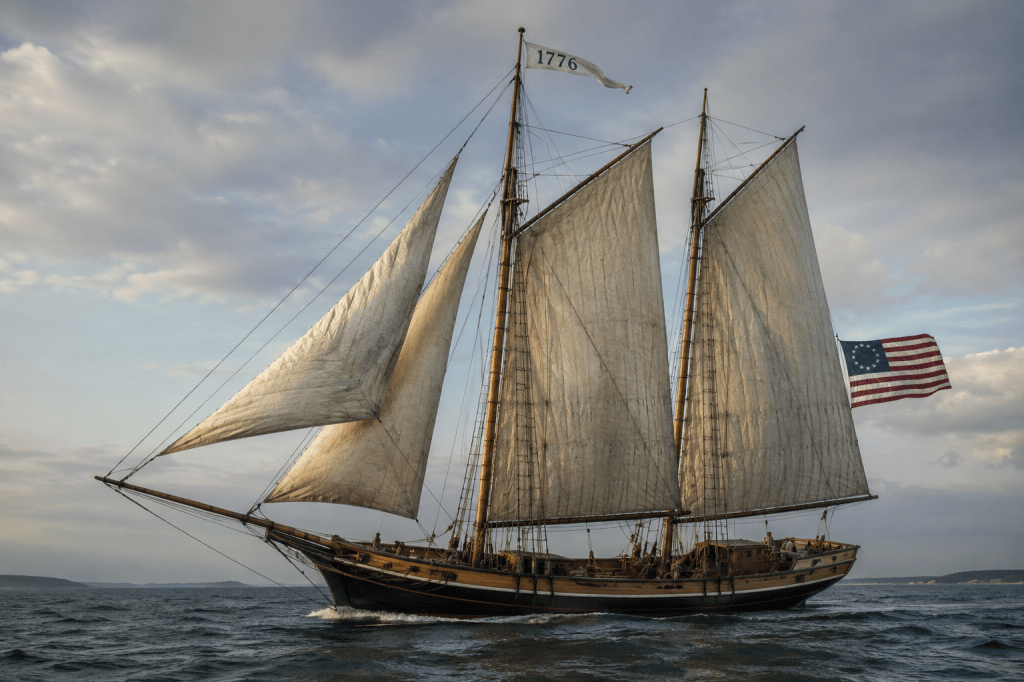
A conceptual rendering of two of the three wharves in Black Rock HarborA typical schooner from 1776
Sources:
Fairfield the Biography of A Community 1639-1989, Farnam, Thomas J. Fairfield Historical Society, 1988
Black Rock Seaport of Old Fairfield Connecticut 1644-1870, Including the Journal of William Wheeler, resident of Black Rock 1762-1845, Pages of History gathered by Cornelius Penfield Lathrop, Tuttle, Morehouse& Taylor Company, New Haven, CT 1930
In June, 1776, details about the conspiracy to poison George Washington and decimate the leadership of the rebellion came to be known. The plot rested on convincing members of Washington’s most trusted retinue to turn against him.
“General Washington was among the first that were to be sacrificed,” wrote Army Surgeon (and future Massachusetts governor) William Eustus in horror. After, “every General Officer [including next-in-command General Israel Putnam] and every other who was active in serving his country in the field was to have been assassinated.” He noted that the conspirators also planned to set fire to New York, destroy warehouses of powder, jam the cannons, and destroy King’s Bridge so no aid could travel along the Boston Post Road.
British Governor William Tryon coordinated the plot from a warship in New York Harbor, where Loyalist visitors regularly rowed out to meet him in the spring of 1776. Although Washington knew nothing of the conspiracy, he was troubled by this open communication and urged the Committee of Safety and Congress to increase patrols. Efforts to disrupt contact between Tryon and the plotters were half-hearted; in May, Israel Putnam reported that jailed Tories were receiving frequent visitors. “The bad women confined in jail are constantly visited by men of as bad characters.”
The plot began to unravel when Thomas Hickey, an Irish-born Connecticut soldier, was arrested on charges of counterfeiting. Hickey had initially joined the patriot cause and was actually a member of Washington’s trusted Life Guard, but at some point had switched loyalties. While in jail, he bragged about his knowledge of the plot and his success at recruiting others. But as so often happens, he bragged to the wrong person, the plot was revealed, and Hickey was charged with sedition. On June 28, 1776, he was hanged in New York in front of a crowd of 20,000, thus becoming the first person executed for treason in the (future) United States.
Plotting the ‘Sacricide’ of George Washington, Gary Shattuck,
Just as the American colonists were divided in their loyalties to the Crown, the British people were divided in their support of the war. After all, they had recently concluded a seven-year war against the French (1754-63), American privateers were raiding British merchant ships and disrupting trade, and the British military, while well trained, was spread thin across the empire. The British knew they would be fighting a long and costly conflict over 3000 miles away, and they were still paying for the last one.
The American colonies only supplied 1% of British GDP; the real value lay in the Caribbean colonies, which were far more profitable.
“At the most moderate of computations, this war will cost Great Britain 10 millins of treasure and 20,000 lives. What then, in the name of wonder is the object of war? Are we to throw away so much treasure and so many lives to gain a point which, when gained, is not worth 1% on our money?” – The Public Advertiser
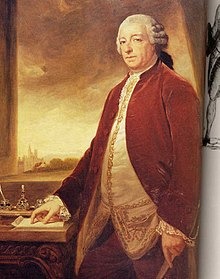
Voices in Parliament argued for more autonomy for the colonies, igniting debate. Many British naval and army officers refused to fight against their fellow Englishmen, either resigning their commissions or requesting a transfer to another post. The Lord Mayor of London asked King George to reconsider his position. Unfortunately, the stronger voice came from Lord George Germain, the British secretary of state for the American colonies, who was determined to squash the “rebellion,” fearing that Britain’s Catholic enemies France and Spain would step in to support the rebels. And, he argued, if the American colonies fell, Canada and India might soon follow.
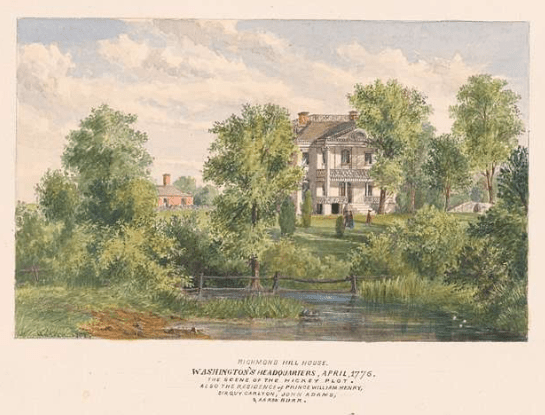
Richmond Hill House Washington’s Residence and Headquarters in 1776
Prominent New York City Loyalist and the last colonial Mayor of New York City, David Mathews, was arrested for his alleged involvement in the “Hickey Plot,” a conspiracy to assassinate General George Washington. The devious plot was conceived in Corbie’s Tavern, near Washington’s residence. All those involved were sworn to secrecy.After being taken into custody in Brooklyn, he was transported to Connecticut, where he was first imprisoned in Hartford before later being placed under house arrest in Litchfield.
Mathews ultimately escaped from his confinement in Litchfield in December 1776 and successfully made his way back to British-occupied New York City, where he resumed service as the British-appointed mayor until 1783.
The Matthews Muliner Playground in the Bronx bears David Mathews’s name in part. The official New York City Department of Parks & Recreation website description characterizes Mathews as “a thief, an embezzler, and a spendthrift.”
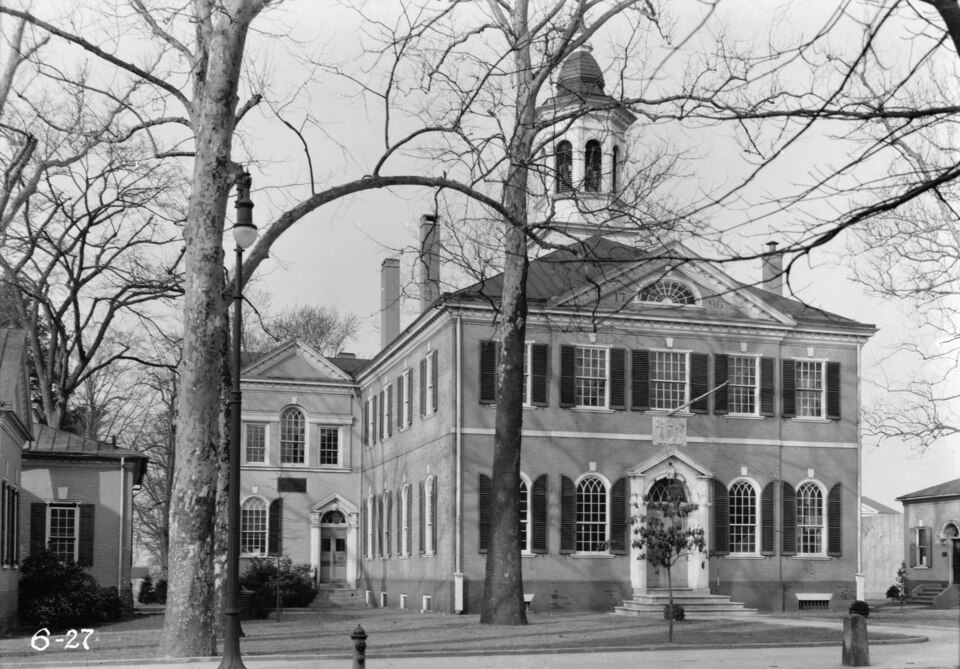
The Burlington County, NJ Courthouse built in 1796 still stands today. The courthouse bell, removed from the earlier courthouse where support for independence was authorized, was placed in the belfry and rang for liberty after the Declaration of Independence was signed. https://www.loc.gov/pictures/item/nj0353.photos.111245p
Just days after Connecticut endorsed independence, the Fourth Provincial Congress of New Jersey convened on June 19, 1776 in Burlington County and authorized the drafting of a new state constitution. This decisive step effectively dissolved royal authority in the colony and paved the way for New Jersey’s delegates to the Continental Congress to formally support independence.
While the people of Connecticut awaited word on whether the Continental Congress would take the final leap toward independence, towns and ports across the colony were already preparing for war.
With its long coastline and deep maritime tradition, naval defense had become a pressing priority for Connecticut. The colony had already established the Connecticut State Navy, a small but resolute force tasked with protecting coastal commerce and challenging British shipping along New England’s waters.
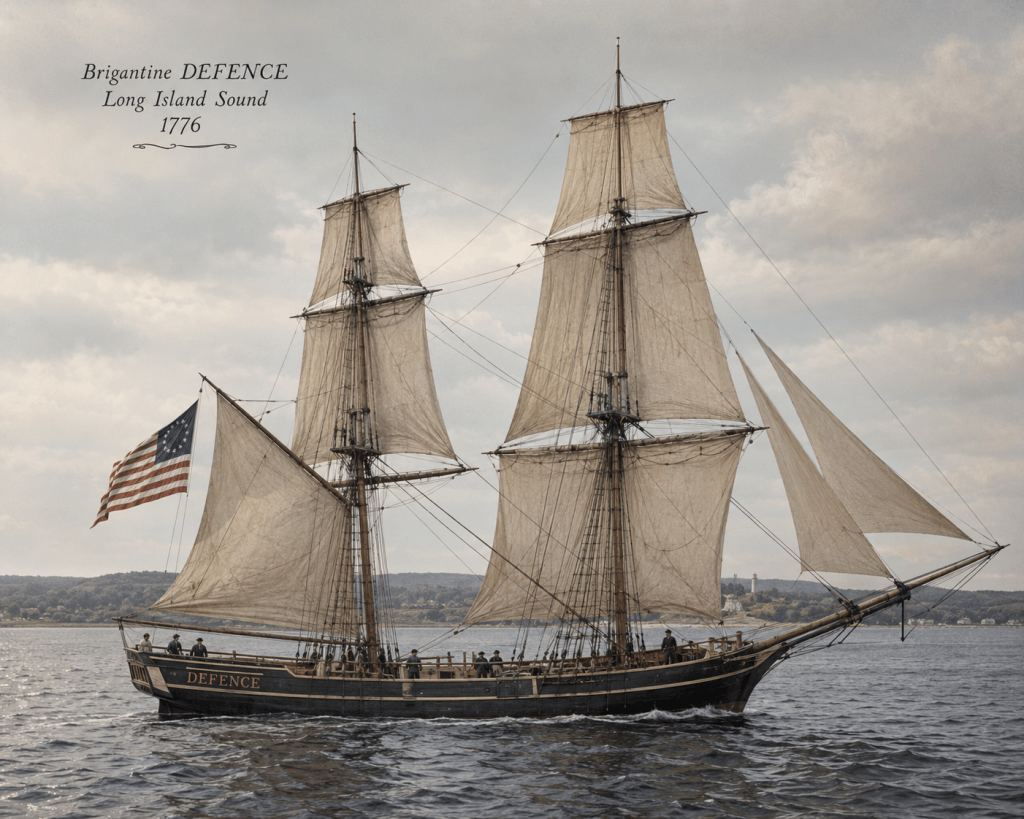
Rendering of the Connecticut Navy Brig Defence
One of the Connecticut State Navy’s most important vessels was the brigantine-of-war Defence. Purchased, outfitted, and armed by Connecticut, the ship entered service in the spring of 1776 under the command of Captain Seth Harding. By mid-June 1776, Defence had already proven her value, participating in the capture of two British transport vessels, the George and the Annabella—off the coast of Boston.
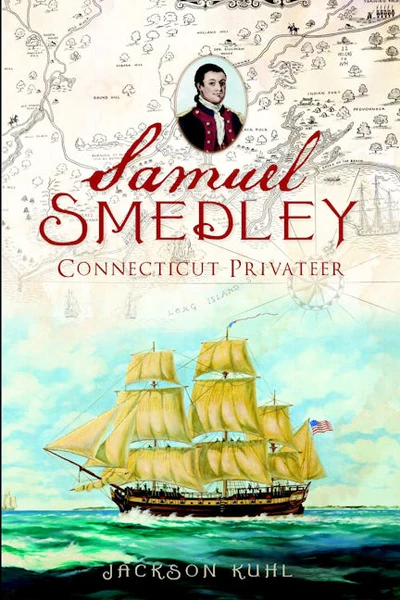
The Defence would later come under the command of Samuel Smedley of Fairfield, who used the vessel to pursue Loyalists attempting to cross Long Island Sound carrying intelligence and supplies that could aid British forces.
This week in 1776 (June 15–21), the Second Continental Congress in Philadelphia was laying the final groundwork for American independence. Most notably on June 15, 1776, the Assembly of the Lower Counties of Pennsylvania declared itself independent of both British and Pennsylvanian authority, officially creating the state of Delaware. -Adams Memorial Foundation
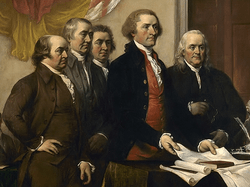
Congress appointed the committee that would draft the Declaration of Independence: Thomas Jefferson, John Adams, Benjamin Franklin, Roger Sherman, and Robert R. Livingston.
Meanwhile, George Washington remained in New York, unaware that a massive British fleet had begun sailing south from Halifax toward New York City. -Mount Vernon Group
On this day in 1776, Connecticut chose independence!
Governor Jonathan Trumbull called an emergency session, and the CT General Assembly officially instructed its delegates at the Second Continental Congress to push for freedom from Great Britain:
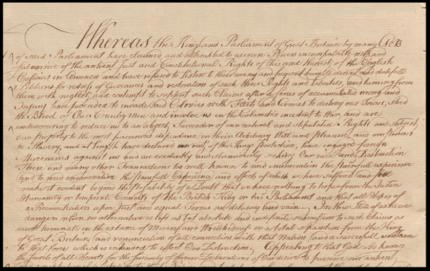
Resolved unanimously by this Assembly, That the Delegates of this Colony in General Congress be, and they are hereby, instructed to propose to that respectable body to declare the United American Colonies free and independent States, absolved from all allegiance to the King of Great Britain, and to give the assent of this Colony to such Declaration, when they shall judge it expedient and best, and to whatever measures may be thought proper and necessary by the Congress for forming foreign alliances, or any plan of operations for necessary and mutual defence; and, also, that they move and promote, as fast as may be convenient, a regular and permanent plan of Union and Confederation of the Colonies, for the security and preservation of their just rights and liberties, and for mutual defence and security, saving that the administration of Government and the power of forming Governments for, and the regulation of the internal concerns and police of each Colony, ought to be left and remain to the respective Colonial Legislatures, and also that such plan of Confederation be laid before such respective Legislatures for their previous consideration and assent.
Meanwhile, in Philadelphia, President of the Second Continental Congress John Hancock writes to George Washington to provide an update on the latest actions of Congress. Hancock’s correspondence informed Washington of Congress’s efforts to strengthen the colonies’ military readiness and create a more organized structure for directing the war effort, reflecting the increasing realization that the struggle for independence would require not only brave soldiers in the field but also effective leadership and administration behind the lines. With that goal in mind, the Department of War was created on June 12th; a critical step taken to improve the administration, supply, and coordination of the growing Continental Army.
Connecticut General Assembly formal resolution instructing their delegates to support independence https://www.ccsu.edu/event/ct-1776-revolutionary-eventJohn Hancock (1737-1793) Signer of the Declaration of Independence, President of the Continental Congress (1775-77), Governor of Mass. (1780-85) Yale University Art Gallery
Black Rock Harbor Maritime Activity In the Late Spring
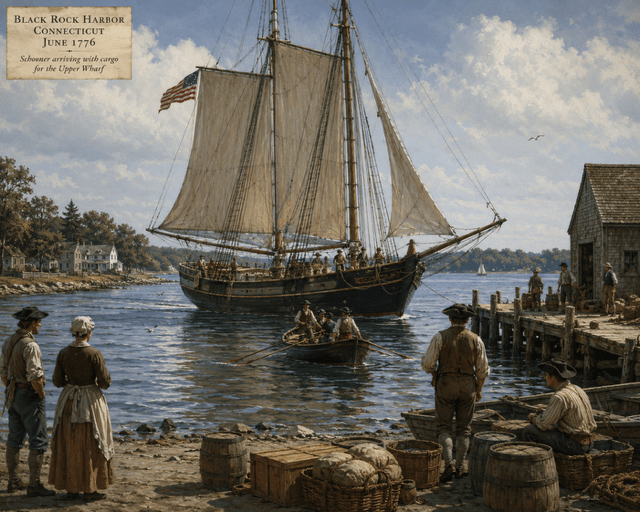
Shipping activity continued to thrive in the spring of 1776. The wharves on Black Rock harbor hosted smaller intercoastal shipping vessels. These would have included single-masted sloops, double-masted schooners and whaleboats which relied on oarsmen for propulsion.
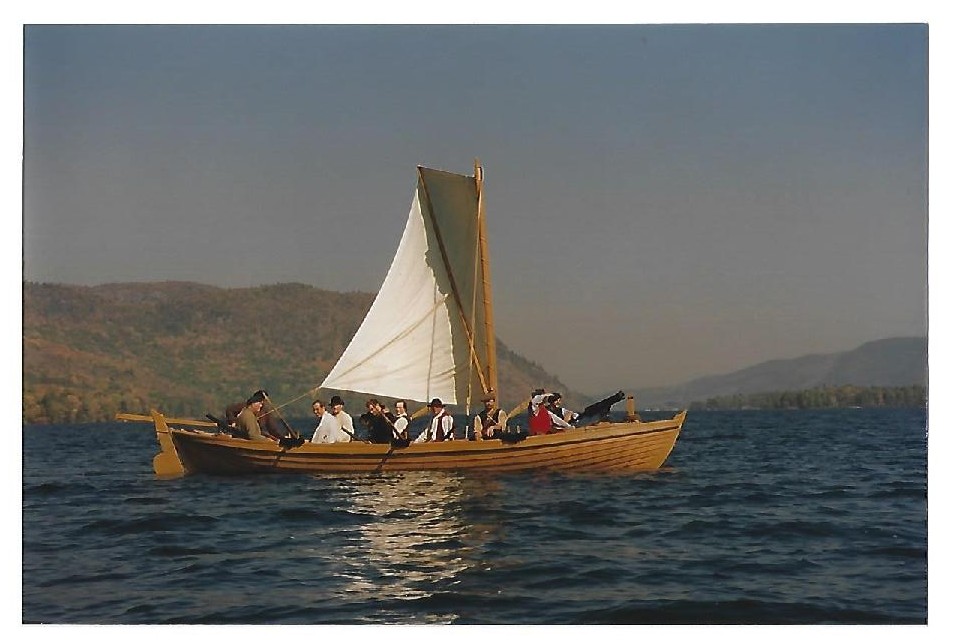
Ultimately, the harbor became a base and depot for privateers; privately owned ships authorized to attack British shipping. Whaleboats were the primary vessels for transporting people and supplies across Long Island Sound. Caleb Brewster used these vessels extensively for his spying activities.
Shipping and trading were primarily with other seaports located on Long Island Sound as well as nearby Atlantic ports. Agricultural, seafood, livestock, and forestry related goods were the major exports while imports included rum, molasses, tea, sugar and textiles.
18th-century, two-masted schooner arriving in Black Rock Harbor
The Middlesex, a 24 foot replica of a 1776 Revolutionary whaleboat which would have been used by Caleb Brewster, was built by the Museum of Darien as part of the nation’s bicentennial celebration. It is currently on display at the museum.
On June 3, 1776, General George Washington sent a letter to Major General Israel Putnam from Connecticut advising that the Continental Congress had approved sending 6,000 militiamen to Canada to reinforce Continental Army troops. Congress had initially authorized up to 9,000 militiamen but decreased the number after the disastrous defeat at the Battle of the Cedars, which severely weakened the American hold on Montreal and forced their ultimate retreat from Canada.
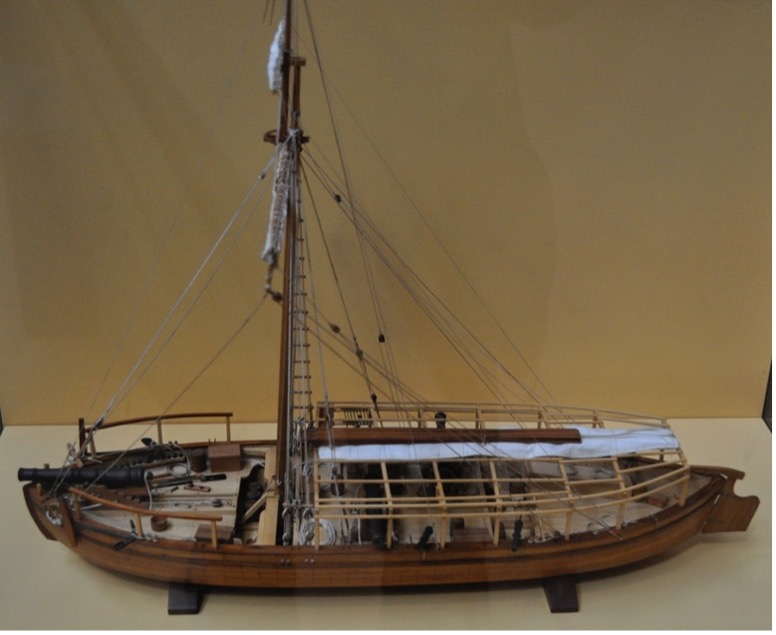
Model of the Continental Navy gundalow USS Philadelphia Courtesy of the National Navy Museum
Washington also instructed Putnam to seek out the materials and carpenters needed to begin construction and deployment of congressionally approved “sundry Gundaloes [shallow-draft barges] and fire rafts [floating vessels packed with combustibles, tar, and gunpowder] to prevent the men of War and Enemies Ships from coming into the New York Bay or Narrows.”
Closer to home, Connecticut patriot Nathan Hale, a 21-year-old Continental Army captain, wrote a letter to his brother noting his local company’s growth and mentioning that General George Washington had been called to Congress to “advise on matters of Consequence”.
According to the Gilder-Lehrman Institute of American History, The Declaration of Independence was not written for King George III– after all, by 1776 he was well aware that the colonists wanted their independence. When the document was written it was quickly dispatched to King Carlos of Spain and King Louis XVI of France to gain their support.
Reflecting on the battle of Bunker Hill in 1775, Benjamin Franklin had written, “the Army had not 5 Rounds of Powder a Man. . . . The World wonder’d that we so seldom fir’d a Cannon. We could not afford it.” Even then, it was obvious that allies were going to be essential if the rebellious colonists had any hope of winning a war against Great Britain.
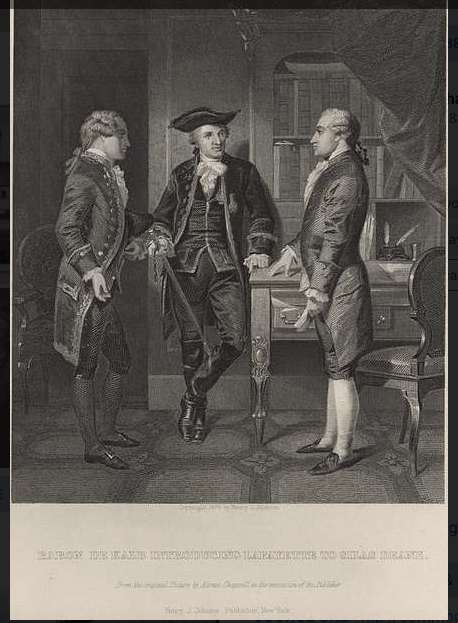
Silas Deane is introduced to the Marquis de La Fayette Martin, Johnson & Company South Caroliniana Library
In the spring of 1776, the Continental Congress sent Silas Deane, a lawyer and one of the Connecticut delegates, on a secret mission to meet with Louis XVI, assess his willingness to help the colonists with materials, and secure an alliance.
Both Spain and France had an axe to grind with Britain – they had been badly beaten in the Seven Years’ War that ended in 1763, with Spain losing Florida and the Gulf area while France had ceded Canada to Britain. Both countries had quietly allowed trading in essential goods and arms to the colonists, but could they be convinced to join the fight wholeheartedly against their common enemy?
A formal treaty with France would not be signed until 1778, once the colonists won a few key battles. But Deane’s efforts in Paris, later joined by Benjamin Franklin and Arthur Lee, convinced France to sell more gunpowder and munitions to the colonists, and to allow American privateers to prey on British ships from French ports in the Caribbean.
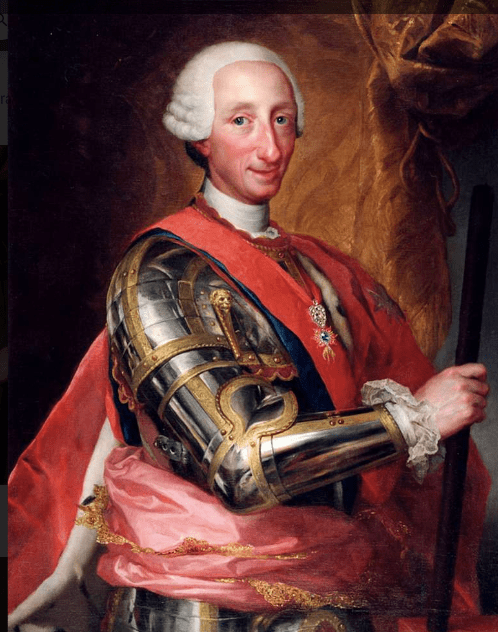
King Charles III of Spain Oil on Canvas Portrait by Anton Raphael Mengs
While Spain never formally signed a treaty, King Charles III did declare that Spain would not “lay down its arms until the independence [of the United States] is recognized by the King of Great Britain.” Britain now had to spread its forces thin to protect its assets in the Caribbean while battling the New England colonies.
Support from Spain and France was not only essential in the success of the rebellion, it turned what had essentially been a civil war into a world war.
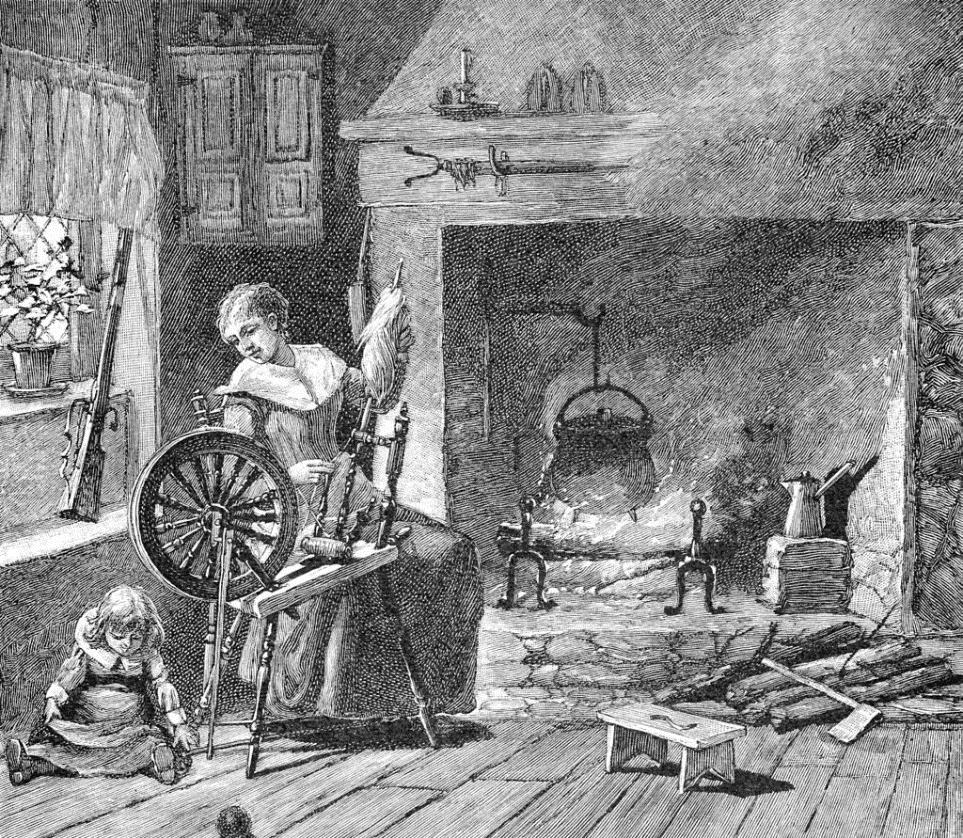
The British saw all their colonies as sources of raw materials (cotton from India; sugar from the West Indies; furs, indigo and wood from the Americas) to be shipped to England and turned into finished products in British factories. Thus, when American colonists began boycotting British goods in response to the Intolerable Acts of the 1760s, American women showed their patriotism by making their own fabrics. “Homespun” became an act of resistance.
Out of necessity, the homespun clothing of the period was plain (ribbons, lace and fine fabrics could not be imported) and crafted so that each finished piece could be taken apart and restitched when fashions changed or when an elbow or knee wore out. Dressing to show one’s status, as was common in Europe, became distinctly out-of-favor in the colonies. In 1769, the Virginia Gazette noted with admiration that over 100 women at a recent Richmond ball had worn homespun gowns.
John Adams wrote that “Silks and Velvets and Lace must be dispensed with [as] Trifles in a Contest for Liberty.” The Continental Association of 1774 declared that wool was the best republican material; after all, it was practical, non-fussy, and sheep were abundant. That gave rise to spinning bees, where colonial women would gather to socialize while spinning wool into yarn, often competing to see who could produce the most.
“Linsey-woolsey” was another common and important fabric in the colonies, involving the tedious and tremendously time-consuming process of turning flax into threads that could be woven with wool to produce a sturdy and plain all-American length of cloth.
Even after the war ended, people continued wearing homespun as a show of republican simplicity. In fact, George Washington pointedly wore a homespun suit for his first inauguration… made with wool from a Connecticut mill. He asked a friend “to procure me homespun broad cloth, of the Hartford fabric, to make a suit of cloaths for myself. I hope it will not be a great while, before it will be unfashionable for a gentleman to appear in any other dress. Indeed we have already been to long subject to British prejudices.”
Sources:
DirtyBlueShirts.com
“The Hands that Spun the Revolution,” by Jennifer Gonzalez
Fashion Archives and Museum of Shippensburg University
The White House Historical Association
Engraving in A Brief History of the United States. 1885. Joel Dorman Steele.
The Continental Congress opened in Philadelphia on Wednesday, May 22nd with a review of a privateering issue involving the sale (without Congress’approval) of the sloop Sally. They then proceeded to address a host of other military matters ranging from supplying the army in Canada to fortifying the Hudson River. And, of course, the continuing problem of finding hard currency to fund these military needs was once again discussed.
But by mid-May, the political landscape was shifting in Philadelphia as sides were drawn between the radical factions (those seeking complete independence) and the moderate factions (those still believing that reconciliation with the Mother Country was possible) with both sides jockeying for influence and control of this historic moment. So, while their focus this day was on military matters, this ongoing political debate lurked in the background, always present in the minds of the delegates.
Earlier this month, on May 15th, “Virginia’s Fifth Revolutionary Convention instructed its delegates in the Continental Congress to propose American independence.” (McMillan, pg. 113)
“Speaking on behalf of all the colonies, Virginia resolved that the delegates appointed to represent this colony in General Congress (Continental) be instructed to propose to that respectable body to declare the United Colonies free and independent states, absolved from all allegiance to, or dependence upon, the Crown or Parliament of Great Britain.” (McMillan, pg. 108)
Although this represented a seismic change, with Virginia being the most powerful colony, Congress still remained focused on matters of war as more reports of British troop movements and intended use of hired foreign troops poured into Philadelphia. Within days, General Washington would arrive in the city to meet with members of the Continental Congress.
Meanwhile, back in Black Rock on this same day, military matters were being pursued as well. According to Joseph Knapp, of Stratford, “this night the brig Defense sailed from Black Rock Harbor to the eastward”. Patricia Q Wall writes in her book, “the Defense was sailing under orders from Governor Trumbull…to intercept and arrest Tories escaping to join British forces or seeking to join Long Island cohorts in plotting raids against Connecticut.” (Wall, pp. 50-51). In a very short period of time, the Defense, at this point under the command of Seth Harding, would be commanded by young Samuel Smedley, a Fairfield resident who spent much of his childhood in and around Black Rock Harbor.
So, as the political tide was clearly turning in Philadelphia, the reality of war continued to consume the efforts of leaders from Hartford to Philadelphia. But there can be no doubt that also consuming the minds of these leaders was the looming question of complete separation from the Mother Country as more and more calls for independence were heard and these leaders were quickly reaching the point of no return.
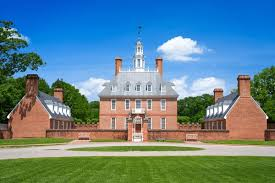
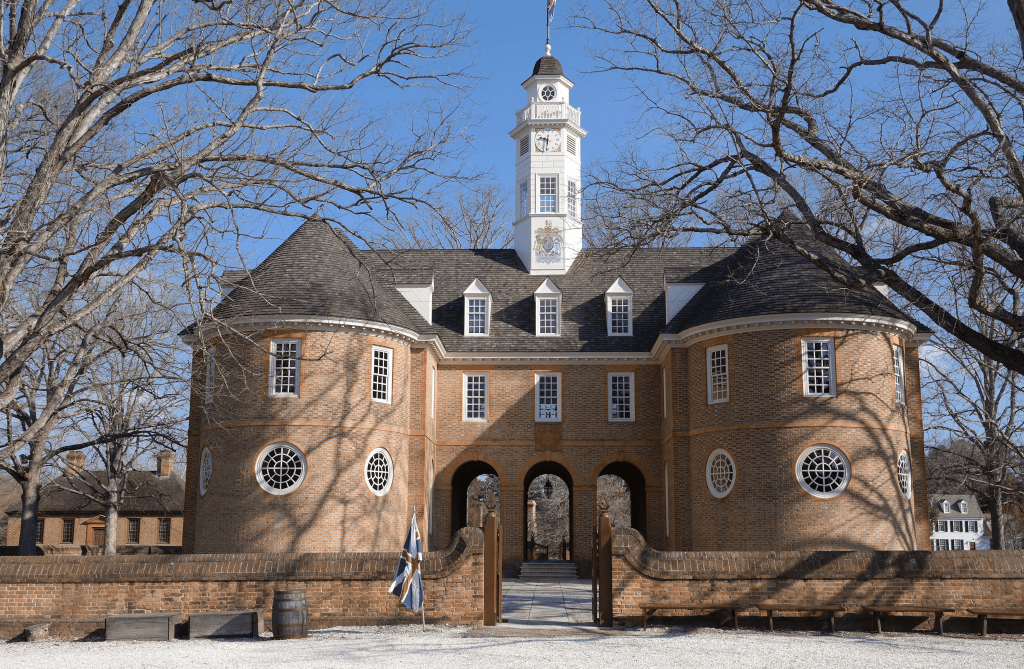
Colonial WIlliamsburg
Of Life & The American Revolution- The Journals of Joseph Knapp of Stratford, Connecticut 1761-1808Wall, Patricia Q , The Stratford Historical Society, Stratford, CT 06615
The Year that Made America McMillan,Tom Lyons Press, Essex CT. 2025
In mid-May 1776, Boston Harbor was the site of two notable skirmishes between colonial privateers and the departing British fleet. These actions occurred two months after the British evacuation of Boston but while the Royal Navy still maintained a presence in the harbor’s outer waters.
The Capture of the Hope (May 17, 1776) On May 17, Captain James Mugford of the colonial armed schooner Franklin captured the British transport ship Hope without a fight. The Hope had sailed from Ireland and was unaware that the British had abandoned Boston. It carried a highly valuable cargo, including roughly 1,500 barrels of gunpowder and an assortment of military stores desperately needed by the Continental Army.
The Battle of Shirley Gut (May 19, 1776) Two days later, on May 19, the Franklin and another colonial vessel, the Lady Washington, became grounded in the tidal flats near Deer Island and Shirley Gut (between Winthrop and Point Shirley). British naval forces from a man-of-war ship anchored nearby launched an attack using 12 to 13 boats filled with armed men.
Despite being heavily outnumbered, the combined American crews repelled the British attack, sinking several of the enemy boats and killing a number of British sailors. However, Captain Mugford was mortally wounded during the hand-to-hand combat. His crew successfully defended the ships, and the Franklin floated free the next morning, carrying Mugford’s body back to Marblehead.
On this date, the Fifth Virginia Revolutionary Convention met at the Capitol in Williamsburg and began debate on independence from the Crown. Although some delegates questioned whether the colonies should first secure foreign alliances before declaring independence, the growing demand for liberty and self-government will ultimately prevail. By formally directing its delegates to advocate for independence,
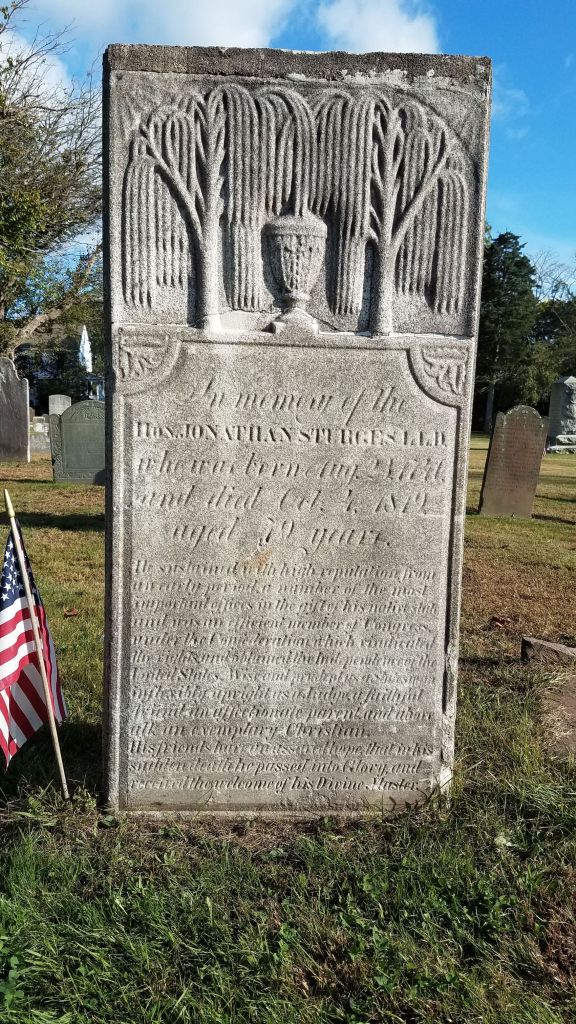
Meanwhile, with rumors of a growing loyalist plot taking hold in New York, Fairfield attorney, Connecticut House of Representatives member and patriot Jonathan Sturges sent a letter to George Washington warning that local militia had captured several men aboard a small sloop who confessed they were bound for Long Island to join British forces.
Momentum toward a complete separation from the British Crown was moving swiftly by the beginning of May quickly leaving behind any thoughts of reconciliation with the Mother Country. A few days before this date, Rhode Island, originally settled by fiercely independent refugees from Massachusetts Bay, boldly declared its own independence from Great Britain.
“The colony’s general assembly passed a resolution charging King George III with forgetting his dignity and entirely departing from the duties and character of a good king…endeavoring to destroy the good people of the colony, and of all the United Colonies, by sending fleets and armies to America”. (McMillan, pg 107)
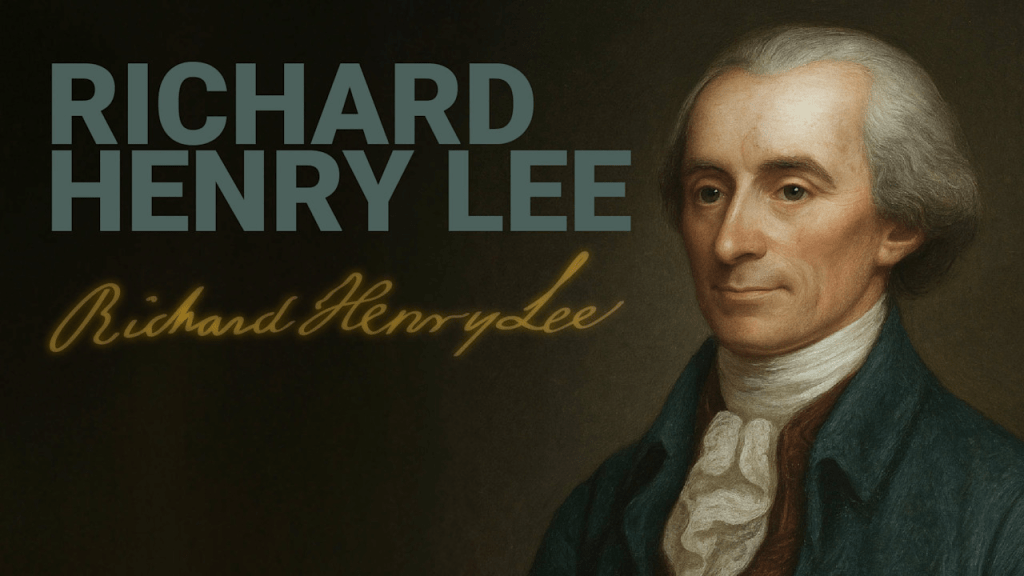
And on this day in 1776, “Richard Henry Lee, the great statesman from Virginia, received alarming news that thousands of foreign mercenaries were heading to America to reinforce the British army… including Hessians, Hanoverians and Scotch Hollanders” (McMillan, pg 107)
Within days, eight of the thirteen colonies had pledged their support for pursuing independence. Though there were still five colonies that were withholding outright support for this cause, by the middle of May, the tide was clearly moving in the direction of independence.
A local reflection of this shift could be seen in the town of Fairfield where tolerance for loyalists (those who wished to remain loyal to the crown) was clearly waning as the patriot cause was growing (Connecticut was one of those eight colonies pledging support for independence). “In May of 1776, Benjamin Huntington informed his wife that thirty-nine loyalists were currently imprisoned in the Fairfield jail”. (Farnham, pg. 82)
A few years later, in 1779, Fairfield would pay a very high price for their support of independence at the hands of General Tryon and British and Hessian troops.
The Year that Made America McMillan,Tom Lyons Press, Essex CT. 2025
Fairfield- the Biography of a Community 1639 -1989 Farnam, Thomas J, Fairfield Historical Society, 1988
The American invasion of Quebec from August 1775 to July 1776 was driven by colonial fears of the province as a cultural and military threat and a simultaneous belief that it should join a unified American nation.
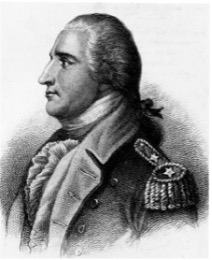
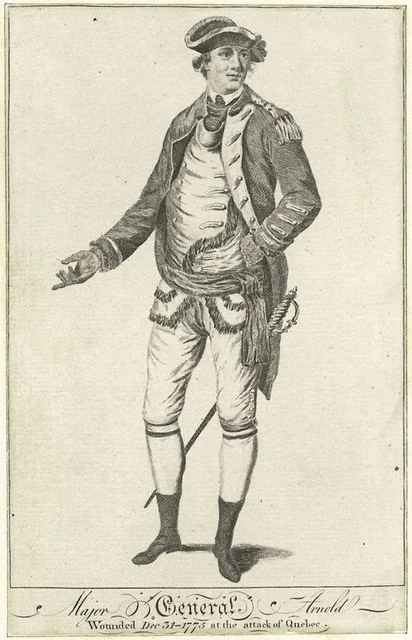
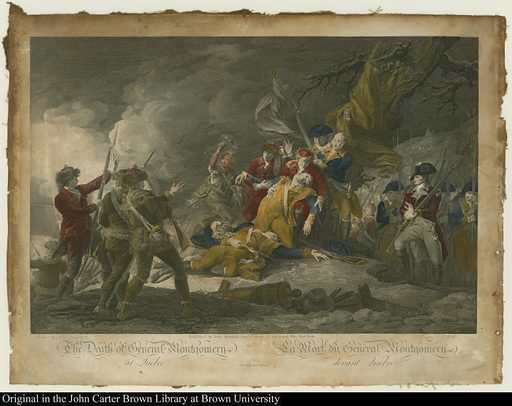
General Richard Montgomery advanced from Fort Ticonderoga, capturing key positions including Fort St. John’s and Montreal; meanwhile, The newly appointed Commander-in-Chief of the Continental Army, George Washington ordered Colonel Benedict Arnold to lead an overland expedition through Maine to Quebec City, where his reduced force joined Montgomery’s troops. Together, they attempted an assault on December 31, 1775, but the attack failed disastrously due to harsh winter conditions and strong defenses, resulting in Montgomery’s death, Arnold’s wounding, and heavy American losses.
On May 6, 1776, the American siege of Quebec collapsed once British reinforcements arrived, marking the end of the failed invasion of Canada. Simultaneously, British reinforcements arrived in Quebec, forcing American troops to retreat.
Meanwhile, in Virginia, the House of Burgesses in Williamsburg met for the last time, ending 157 years of legislative history, as colonial governance shifted toward revolutionary, independent conventions.
By 1775 , Black Rock Harbor had established itself as a primary shipping center for the Fairfield colony. The harbor offered a sheltered and deep channel for shipping, and their cargos had easy access to Kings Highway and the surrounding communities. In 1753, a bridge and road across Ash Creek were completed and created direct access to Fairfield Center. More importantly, the three wharves at the base of the harbor provided the infrastructure required for the maritime trading and ship building and maintenance activities.
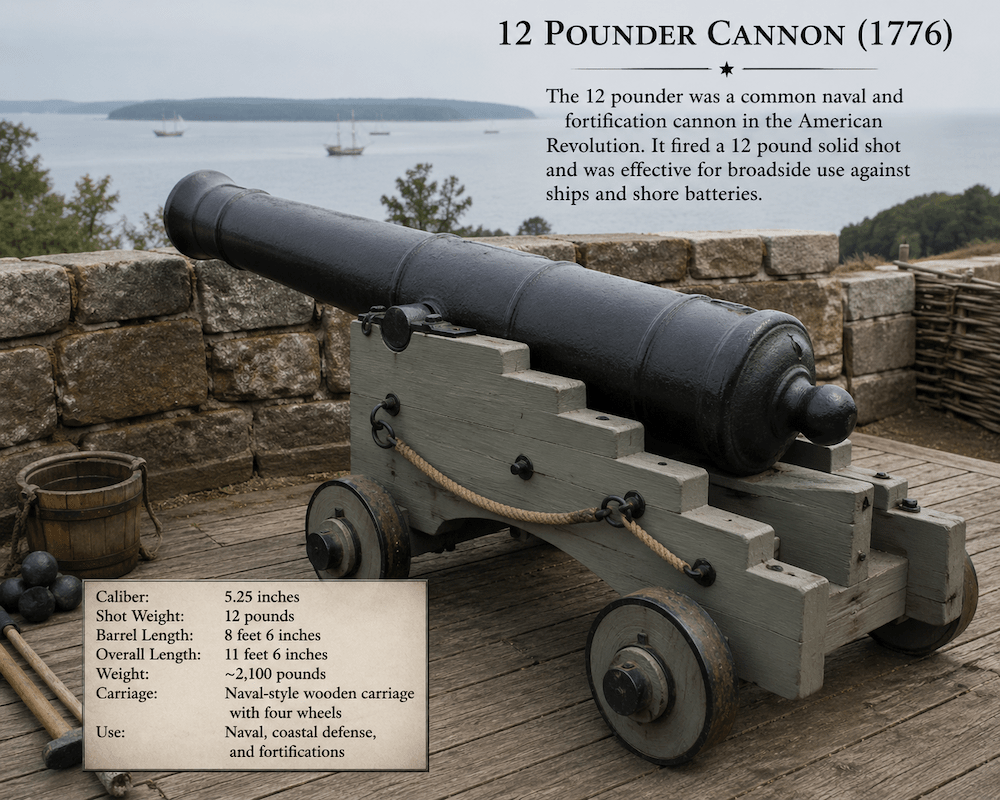
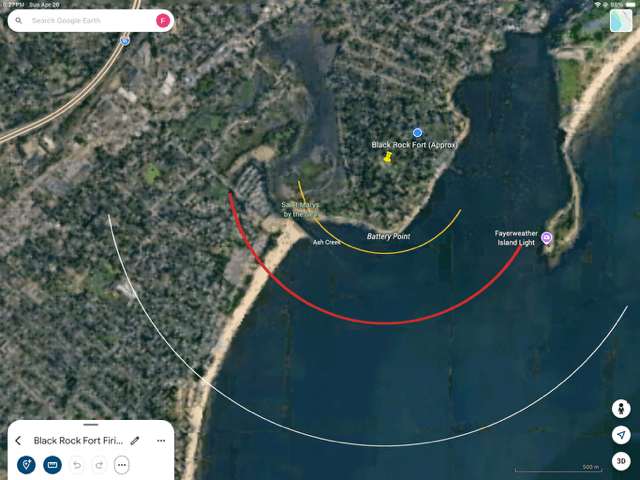
The Black Rock natives actively supported the colonial rebellion. By 1776, some members of the community had headed to Boston and New York to assist local militias who were facing British forces. The Black Rock maritime economy was also suffering from the closure of Boston and New York harbors. Recognizing the possibility of a British raid on its community, Thaddeus Burr and Gold Selleck Silliman approached the Connecticut Assembly in February 1776 and requested assistance in fortifying the harbor. This was ultimately approved by the Connecticut Council of Safety which authorized the construction and manning of a fort on Grovers Hill (often referred to as the Black Rock Fort). The fort was to be manned by a 25-man garrison overseen by one lieutenant and two sergeants. The initial construction and staffing were overseen by Lieutenant Jonathan Mills. Two 12 pounder cannons were later authorized to be mounted within the fort and thereby provide the firepower needed to defend the harbor entrance.
The 12 pounders could fire solid shot up to 1,600 meters (shown as a white arc on the accompanying map) but had an effective firing range of 900 meters (shown as a red arc) and 500 meters if the guns were firing cannister, which essentially converted them into large shot guns that would be employed if directly assaulted, (the yellow arc).
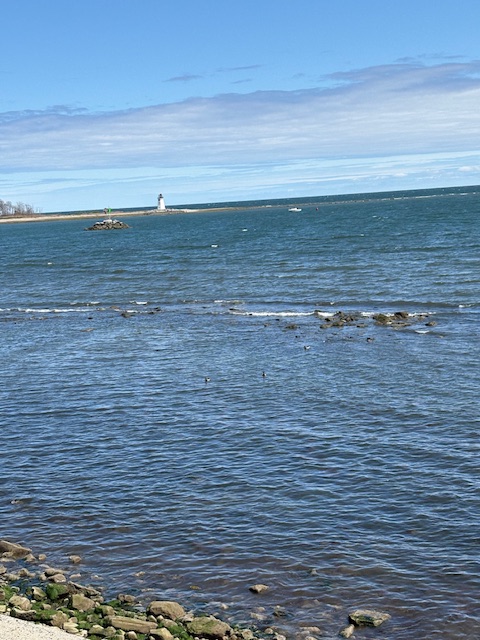
The fort’s location has been subject of debate as to whether it was located on the edge of the harbor or further up Grovers Hill. However, a strong argument could be made that it was located on the edge of the harbor at what is referred to as Battery Point. This location would have provided a clear field of fire for the cannon and would have been easily accessible by boat. In fact, there were no roads accessing this portion of the Black Rock peninsula at this time. The road terminated at the current corner of Balmforth Street and Grovers Avenue. Beyond this point were foot trails. Given that the barrel alone of a 12 pounder exceeded 2000 pounds and was approximately eight and a half feet long, it is most likely that the guns were delivered to the fort by boat and not dragged up the hill. It was not until 1779 that the two cannons were fired in anger at an invading force.
Sources:
Fairfield the biography of a community 1639 -1989 Farnam, Thomas J, Fairfield Historical Society, 1988
Black Rock Seaport of Old Fairfield Connecticut 1644-1870, Including the Journal of William Wheeler, resident of Black Rock 1762-1845, Pages of History gathered by Cornelia Penfield Lathrop, Tuttle, Morehouse & Taylor Company, New Haven, CT 1930
With the exception of the raids along the coast and some British incursions into the interior, Connecticut remained free of major battles and was never occupied by the British. That, along with its rich farmland, meant the colony became a major supplier of food for Washington’s army.
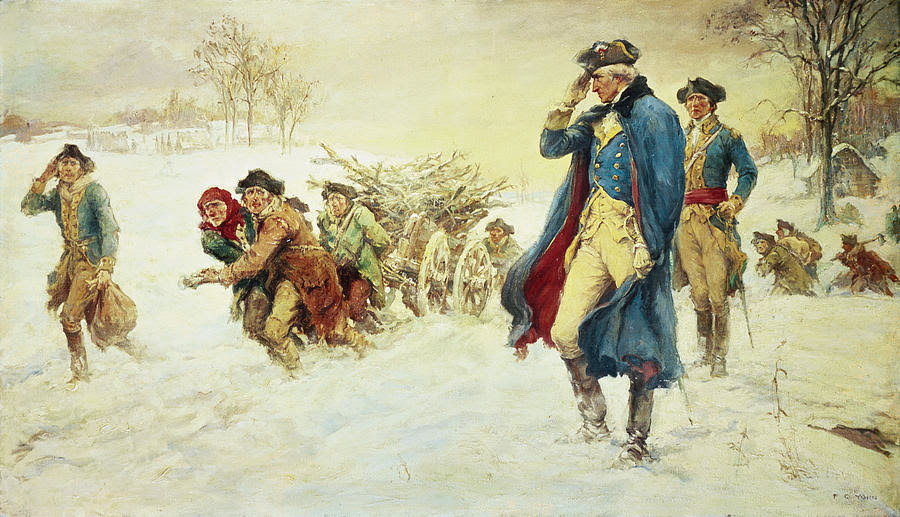
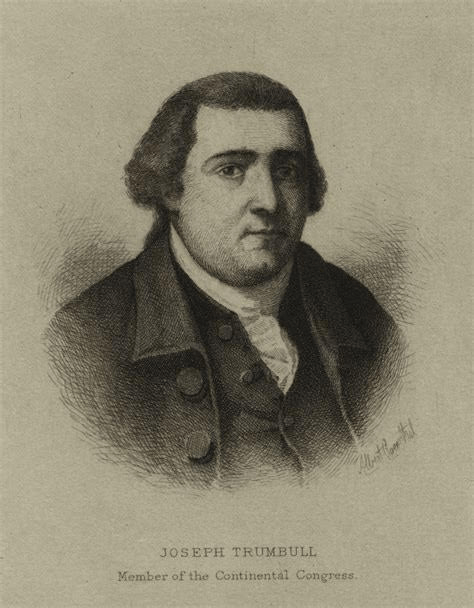
In 1775, Joseph Trumbull, son of the governor, was appointed commissary general and tasked with overseeing supplies to the troops. His effectiveness at carrying out his duties proved to be pivotal to the army’s success, as hunger was a constant problem. Encamped at Valley Forge during a notoriously brutal winter, Washington desperately appealed to Trumbull for cattle to feed his men. When that herd finally arrived, it was supposedly “devoured within five days.”
“For the war as a whole, Connecticut’s total contribution of supplies greatly surpassed what could be expected from a state of such small size and population and earned it the title of “the Provisions State.” – The Connecticut Society of the Sons of the American Revolution
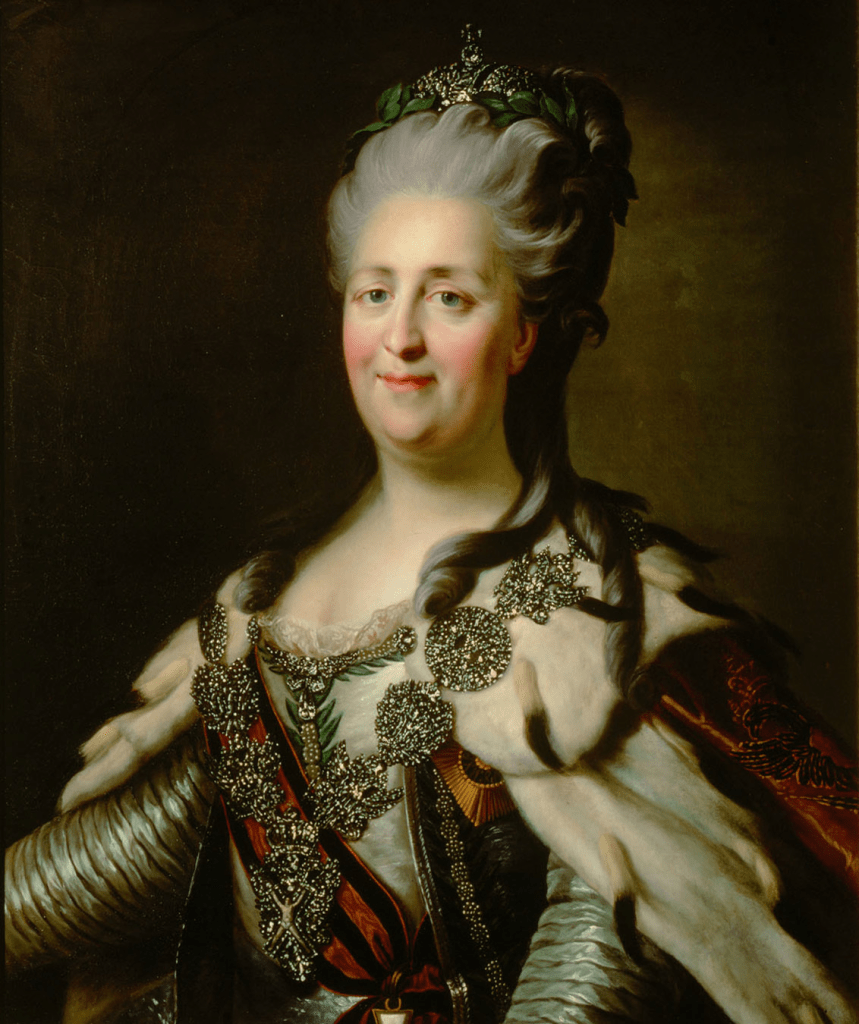
Between the growing rebellion in the American colonies and in his holdings in the Caribbean and elsewhere, King George grows worried that his army will be stretched too thin. He initially asks Catherine the Great of Russia to lend him a few thousand fighting men, but she turned him down with the excuse that she wouldn’t want anyone to think he couldn’t handle his own rebellions. Instead, George turns to the various states of Germany, and thus approximately 30,000 Hessians, from Hesse-Cassel and Hesse-Hanau, join the British to fight the rebelling colonists.
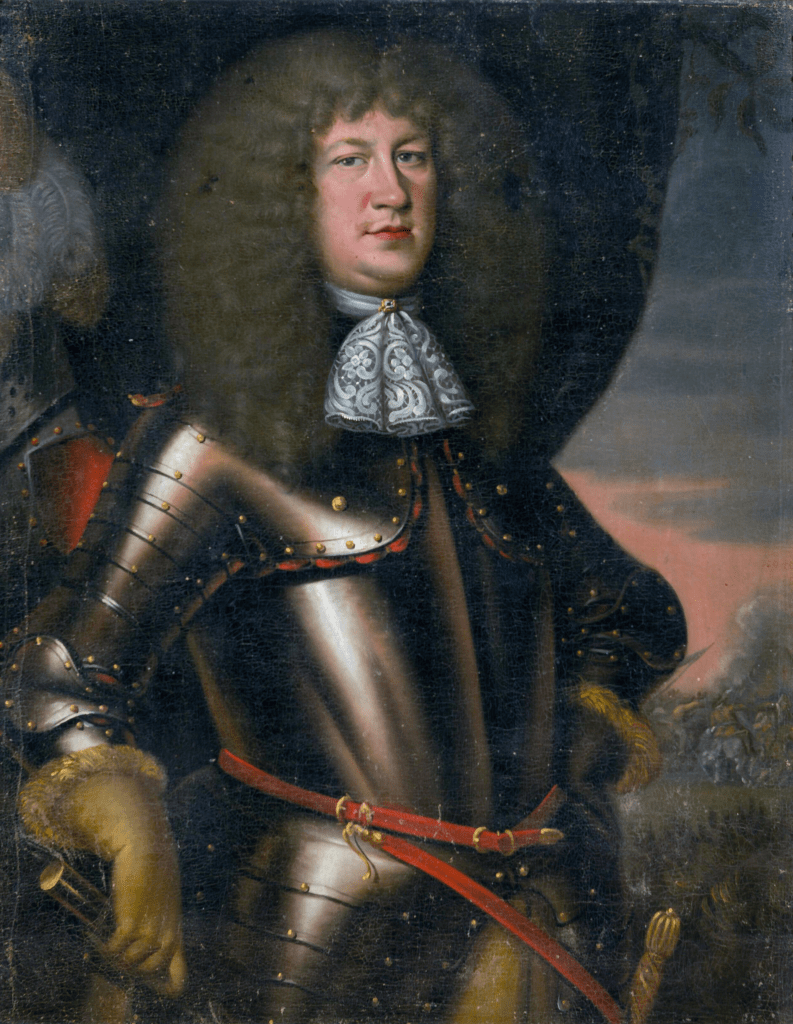
Described as “barbarous strangers” by writer and activist Mercy Warren of Massachusetts, the Hessians were actually landless, impoverished peasants rented to Britain by their landgrave, Frederick II. These soldiers were paid well, with the British doling out more money for Hessians who were killed rather than those wounded or captured.
Catherine the Great of RussiaFrederick II of Hesse-Cassel
General George Washington issues a series of General Orders, one warning that British troops who had recently evacuated Boston could arrive in New York at any moment.
Washington urged engineers to speed up fortifications, with additional soldiers assigned to help complete defensive works as quickly as possible.
Also on this day, John Adams noted in his diary growing concern over reports of secret correspondence between the British government and Maryland’s royal governor, Robert Eden.
In response, the Continental Congress ordered officials to seize both the governor and his papers, fearing his actions could threaten American liberty. This underscores the mounting tensions and deepening mistrust as the colonies moved closer to independence.
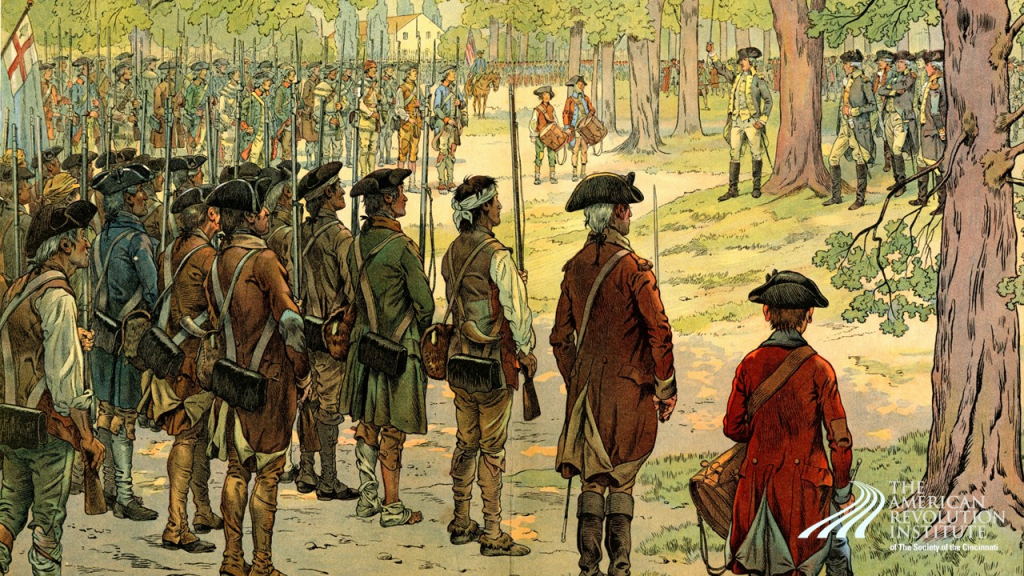
The British evacuation of Boston began on Sunday, March 17th sailing their forces to their naval base on Nova Scotia. General Washington made the decision to move his newly formed army to fortify New York City and, particularly, to establish control of the Hudson River. He correctly predicted that this would also be the goal of the British forces. The colonial exodus from Boston began in April of 1776.
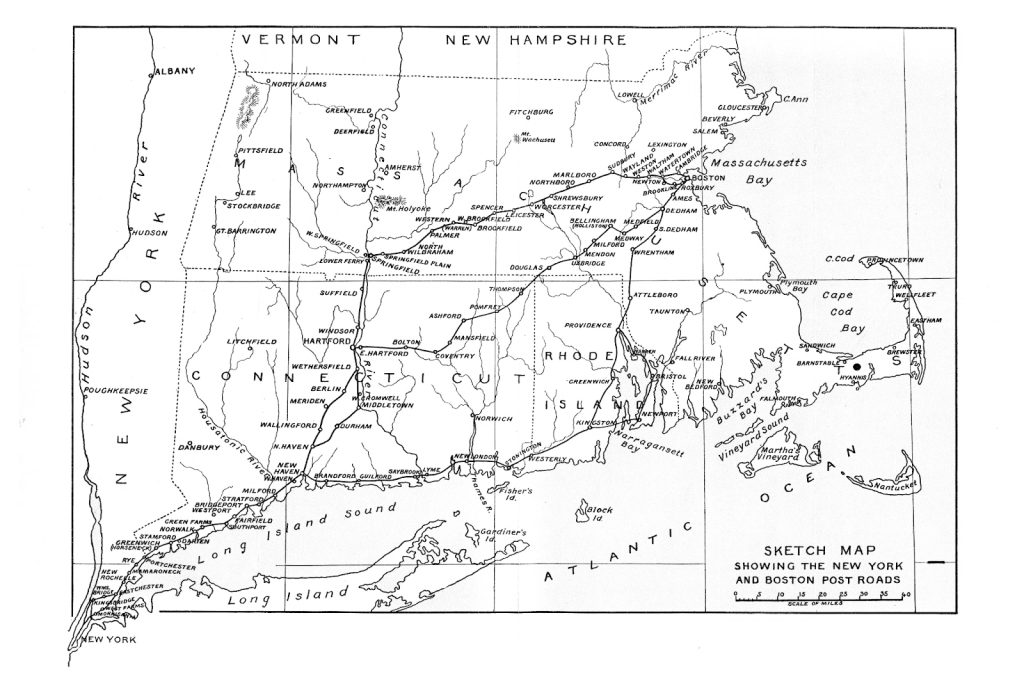
Lacking the ships that the British had (Abigail Adams counted 170), Washington was forced to move his army over one of the branches of what were then known as the Post Roads. According to Patricia Q. Wall, in her book, Of Life & The American Revolution- The Journals of Joseph Knap of Stratford, CT 1761-1808, Governor Trumbull (the only colonial governor loyal to the patriot cause), requested that the troops follow the coastal road so that they may protect the colony should the enemy make any attempt to attack Connecticut.
The march would have been difficult and slow. Quill writes that in perfect weather, they could have expected to cover about twenty miles. But conditions were never this good as rain, and even snow, would have slowed their progress. For Fairfield (and Black Rock), the troops would have marched along what is today King’s Highway past where today we find Stop and Shop and then through the center of Fairfield on their way to Norwalk, and ultimately Brooklyn and Manhattan.
Residents living in this area in April of 1776 would surely have been busy supplying these troops with a host of provisions including food, shelter for some, firewood, hay for their horses, repairs for their wagons and much more. This must have been a very busy and tense time for these residents as the war, which had begun a year earlier, was quickly moving to their doorstep.
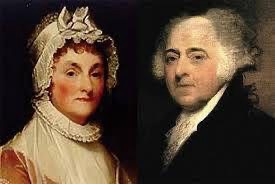
In May 1776, the American Congress bid each colony to form new governments, since British rule had basically collapsed. Sitting in Philadelphia with the American Congress, John Adams received the letter written the previous month from his wife, Abigail, which would go on to be often-quoted over the years:
“I long to hear that you have declared an independency, and by the way in the new Code of Laws which I suppose it will be necessary for you to make I desire you would Remember the Ladies, and be more generous and favourable to them than your ancestors.” She cautioned him not to “put such unlimited power into the hands of Husbands…Remember all Men would be tyrants if they could.”
Less well known is what she added later: “If particular care and attention is not paid to the Ladies, we are determined to foment a Rebelilon, and will not hold ourselves bound by any Laws in which we have no voice, or Representation.”
If only we could have been there when she received John’s answer: “As to your extraordinary Code of Laws, I cannot but laugh,” he wrote, adding that he blamed the British for inflaming everyone from Tories to Bigots, Canadians to Indians and Russians and “Roman Catholicks.” As well as women, he implied.
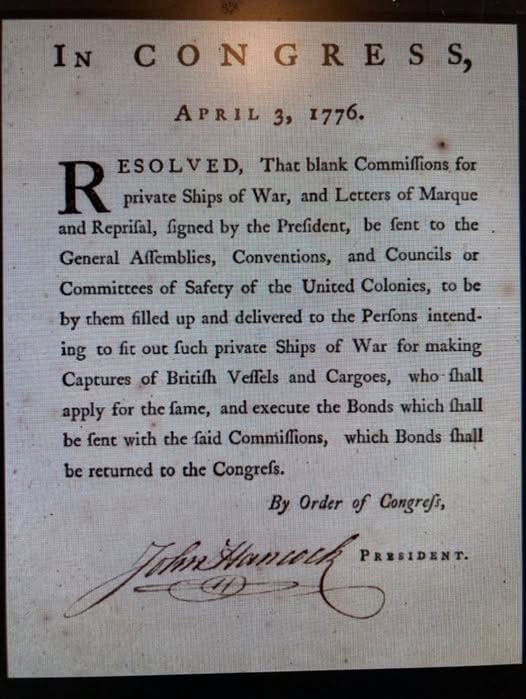
The Continental Congress opened its session in Philaselphia for the day and spent most of the morning attending to “war business”- referring a letter from General Washington to committee, payment for supplies, military matters, etc.
They then spent the remainder of this session establishing the rules of engagement for privateering and providing authority to the various leaders and committees of the colonies for the issuance of “letters of marque”.
Letters of marque were issued to commanders of boats providing them permission to attack British ships- both military and merchant. Rules were established for engagement and the distribution of valuable cargo seized at sea. This practice was a more civilized form of piracy, but with only an infant navy, this measure was deemed critical by the Continental Congress as war efforts intensified.
For Black Rock and other seaports along the coast, privateering became a common practice throughout the war. Among notable privateers who sailed out of Black Rock Harbor were Caleb Brewster and Samuel Smedley.
Once finished with this matter, Congress adjourned until 10:00 the next morning, April 4th, 1776.

 Black Rock Community Council History Program